Quick Links:
- Guidelines: Eligibility of Gold Standard VERs for use under CORSIA’s first and second phase
- CORSIA Updates page
SECTIONS
- What is CORSIA?
- What is the recent decision by ICAO on CORSIA?
- What are the eligibility criteria for Gold Standard VERs (GS-VERs) under the Pilot Phase of CORSIA?
- Is there a change to eligibility for the pilot phase of CORSIA?
- What are the eligibility criteria for Gold Standard VERs (GS-VERs) under Phase One of CORSIA?
- How do I know if VPAs registered under a PoA meet CORSIA's crediting period start date requirements?
- To be eligible for use under CORSIA, credits must be issued to activities that started their first crediting period from 1 January 2016. For VPAs registered under a PoA, this requirement applies at the individual VPA level. This means that even if the crediting cycle start date of the PoA was before 1 January 2016, any VPAs registered under the PoA that have crediting period start dates after 1 January 2016 would meet the requirement.
- What activities are excluded from use under Phase One of CORSIA?
- What updates have been made to the Standard Requirements?
- What is the process for labelling within the Gold Standard Impact Registry?
- What process/requirements have been put in place to avoid any risk of double claiming?
- What insurance policies are approved under Gold Standard?
- Are there plans to recognise additional insurance products?
- What is the procedure for managing the non-application of a corresponding adjustment?
- Can the CORSIA label be removed from a GS-VER?
- Where can I locate the relevant documents and templates for applying a CORSIA label?
- How can Registry account holders retire eligible units for use in CORSIA?
- How do I find CORSIA Phase 1 eligible credits on the Gold Standard Impact Registry?
What is CORSIA?
The Carbon Offset & Reduction Scheme for International Aviation (CORSIA) is a global initiative designed to address greenhouse gas emissions from international aviation.
Administered by the UN’s International Civil Aviation Organization (ICAO), CORSIA mandates that airlines meeting specific criteria must monitor and report their emissions. Emissions are assessed against a 2019 baseline, and any increase above the baseline must be offset with carbon credits, with the goal of achieving carbon neutral growth.
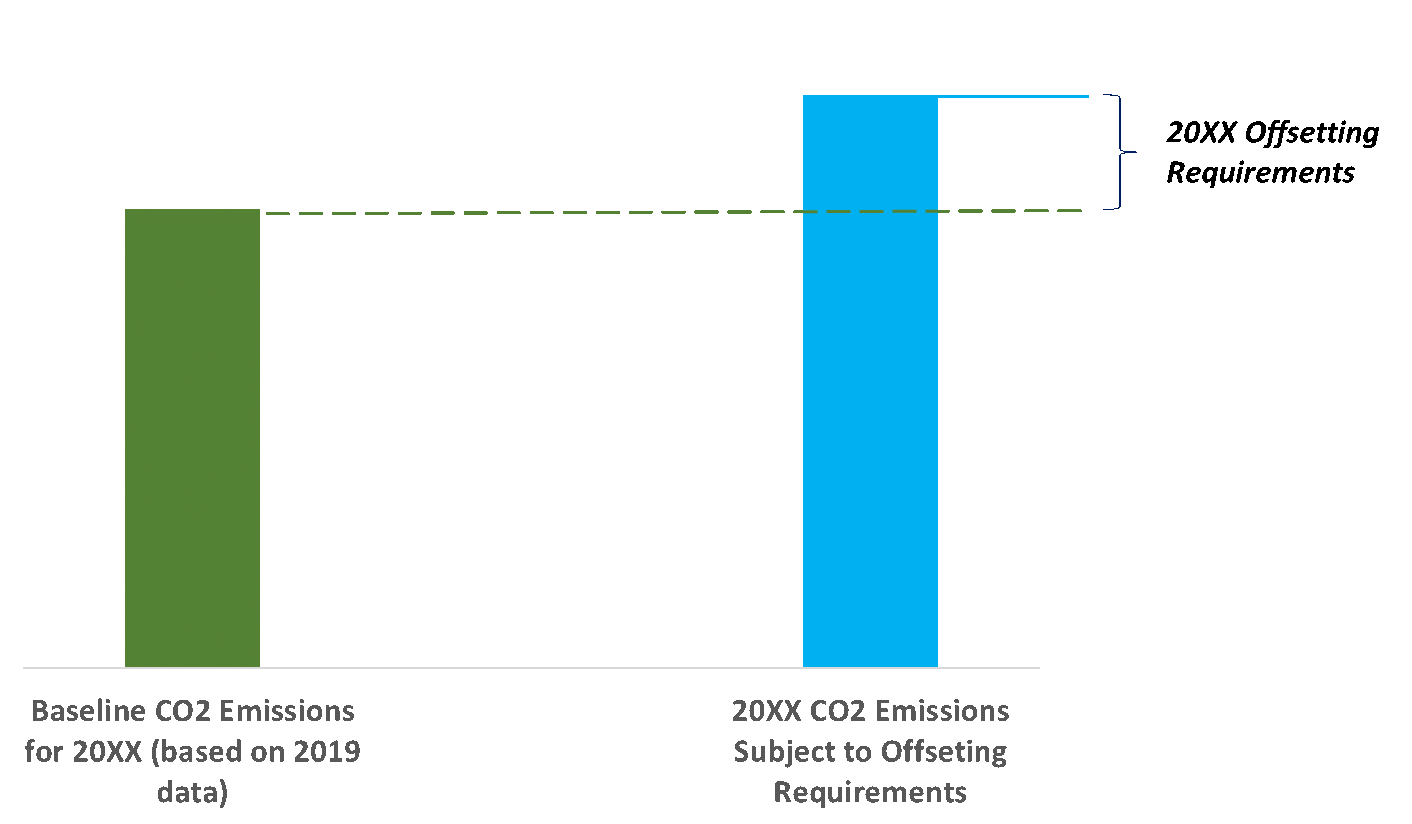
CORSIA has three main phases:
Pilot Phase (2021-2023):
- Participation is optional for countries.
- Test phase to prepare for future requirements.
Voluntary First Phase (2024-2026):
- Participation is optional for countries.
- 126 countries have committed, affecting flights between participating states.
Mandatory Second Phase (2027-2035):
- Participation becomes compulsory for all international flights.
Airlines have three tools available to deliver carbon neutral growth:
- Improve fleet efficiency
- Increase the use of sustainable aviation fuels (SAFs)
- Purchase carbon credits approved in ICAO’s Eligible Emissions Units document.
Gold Standard has been approved to supply Eligible Emissions Units for the Pilot Phase and Phase 1.
What is the recent decision by ICAO on CORSIA?
ICAO announced the eligibility of Gold Standard VERs (GS-VERs) for the First Phase of CORSIA. Details of the decision, and the criteria and requirements for credits to be eligible can be found in ICAO’s Eligible Emissions Units document and the Gold Standard CORSIA Updates Page.
Gold Standard had previously been approved as an eligible program for CORSIA’s pilot phase, which ran from 2021-23. This new approval extends access to a compliance-driven market for Gold Standard projects, enabling developers to sell eligible carbon credits to airlines, expanding demand and long-term support for projects.
What are the eligibility criteria for Gold Standard VERs (GS-VERs) under the Pilot Phase of CORSIA?
Gold Standard VERs and CERs were declared eligible for all project types for the CORSIA pilot phase, with some restrictions on vintage, microscale and Land Use and Forestry (LUF) projects.
Vintage
Gold Standard projects that have a first crediting period start date on or after 01 January 2016 are eligible to supply credits for CORSIA, for credits with vintages between 01 January 2016 through 31 December 2023.
Microscale
Microscale projects that use the Gold Standard Validation and Verification Fund are not eligible to supply credits to the CORSIA scheme.
Land Use and Forestry
Planned Emission Reductions (PERs) are not eligible under CORSIA. Gold Standard VERs from certain Afforestation/Reforestation activities are not eligible, but credits from soil carbon, agriculture, and livestock projects may be eligible.
Is there a change to eligibility for the pilot phase of CORSIA?
Gold Standard continues to be eligible for the 2021-2023 compliance period (Pilot Phase) according to the eligibility parameters for that period described in section I of the Eligible Emissions Units document. In December 2024, ICAO also confirmed that GS VERs of vintages 2021-23 may be eligible for use on the Pilot Phase, where these GS VERs are authorized by the host country for use under Article 6, and the project has taken one of the two available routes under Gold Standard to protect against double claiming.
What are the eligibility criteria for Gold Standard VERs (GS-VERs) under Phase One of CORSIA?
In accordance with ICAO’s Eligible Emissions Units, only Gold Standard VERs that meet the below criteria are eligible for use under the First Phase:
Gold Standard VERs that:
- Are issued to activities that started their first crediting period from 1 January 2016 and were issued in respect of emission reductions that occurred from 1 January 2021 through to 31 December 2026, and
- Have been authorised by the host country for use in CORSIA by way of an attestation to the avoidance of double claiming, and
- For which the programme has verified, in accordance with its procedures, that either:
- The host country has already applied a corresponding adjustment, and/or
- The GS-VERs are the subject of a guarantee approved by the programme that covers all units to which the host country Letter of Authorisation applies and have Eligible Unit Dates within the relevant CORSIA compliance period.
- Are not from any of the below excluded categories:
- Planned Emission Reductions (PERs).
- Units issued to microscale activities where an accredited entity has not carried out validation and verification.
- VERs issued to all activities that are developed in REDD+ (Reducing emissions from deforestation and forest degradation in developing countries) countries and utilise methodologies in the programme’s Land Use and Forestry & Agriculture categories and are estimated to generate greater than 7,000 Verified Emissions Reductions (VERs) per annum individually or grouped, with the allowable exception of activities that utilise methodologies in Gold Standard’s Soil Organic Carbon, Agriculture, and Livestock categories.
- VERs issued to activities involving grid-connected renewable electricity generation/supply that are estimated to have a maximum output capacity greater than 15 megawatt-hours of electricity, individually or grouped.
- VERs issued to all activities that utilize methodologies in the programme’s Engineered Removals category.
How do I know if VPAs registered under a PoA meet CORSIA's crediting period start date requirements?
To be eligible for use under CORSIA, credits must be issued to activities that started their first crediting period from 1 January 2016. For VPAs registered under a PoA, this requirement applies at the individual VPA level. This means that even if the crediting cycle start date of the PoA was before 1 January 2016, any VPAs registered under the PoA that have crediting period start dates after 1 January 2016 would meet the requirement.
What activities are excluded from use under Phase One of CORSIA?
Under its scope of eligibility, ICAO has excluded the following activity and/or unit types, methodologies, programme elements, and/or procedural classes as ineligible for use under Phase One of CORSIA:
- Planned Emission Reductions (PERs).
- Units issued to microscale activities where an accredited entity has not carried out validation and verification.
- VERs issued to all activities that are developed in REDD+ (Reducing emissions from deforestation and forest degradation in developing countries) countries and utilise methodologies in the programme’s Land Use and Forestry & Agriculture categories and are estimated to generate greater than 7,000 Verified Emissions Reductions (VERs) / annum individually or grouped, with the allowable exception of activities that utilise methodologies in Gold Standard’s Soil Organic Carbon, Agriculture, and Livestock categories.
- VERs issued to activities involving grid-connected renewable electricity generation/supply that are estimated to have a maximum output capacity greater than 15 megawatt-hours of electricity, individually or grouped.
- VERs issued to all activities that utilize methodologies in the programme’s Engineered Removals category.
Engineered Removals Exclusion:
CORSIA’s Technical Advisory Body (TAB) excluded novel Carbon Dioxide Removal (CDR) methods—such as biochar, Direct Air Capture (DAC), and enhanced weathering—from the current eligibility list. TAB highlighted that engineered CDR methods are relatively new and may lack established international best practices and mature, standardized methodologies.
The TAB plans to reassess novel CDR methodologies during its 2025 assessment cycle. This evaluation will consider ongoing developments, including advancements in IPCC guidelines and Article 6 of the Paris Agreement.
What updates have been made to the Standard Requirements?
Gold Standard has published clarifications and minor revisions to its standards documentation, to align with requirements set out by the ICAO for approval to supply credits for Phase 1 of CORSIA.
Under these revisions, Gold Standard:
- Clarified its policy for managing any reversals of emission reductions or removals that are eligible for CORSIA
- Updated its procedures for verifying reports by host countries on their Article 6 authorisations and their application of corresponding adjustments, as well as managing double claiming
- Introduced new requirements to ensure the avoidance of double claiming between Nationally Determined Contributions and credits used towards CORSIA compliance obligations
- Implemented new procedures for labelling CORSIA Eligible Units in the Gold Standard Impact Registry
In addition, Gold Standard made several updates in November 2024 to reflect new developments in Article 6, including to recognise a template Letter of Authorisation (LoA) published by the Multilateral Investment Guarantee Agency (MIGA).
What is the process for labelling within the Gold Standard Impact Registry?
Project developers seeking labelling of GS-VERs as eligible for use under the First Phase of CORSIA must follow the steps outlined in the Guidance Document. All templates and supporting documents can be found on the Gold Standard CORSIA Updates Page.
What process/requirements have been put in place to avoid any risk of double claiming?
The project developer must follow one of two routes to ensure the avoidance of double claiming between the use of GS-VERs towards CORSIA and their accounting towards the Nationally Determined Contribution (NDC) of the relevant host country:
Option 1 – Corresponding Adjustment
Provide evidence that the relevant host country has applied a corresponding adjustment for the GS-VERs, through its Biennial Transparency Report to the UNFCCC. This evidence could be:
- A copy of the Biennial Transparency Report, where the country’s application of a corresponding adjustment can be traced to the GS-VERs.
- A link to information in the Article 6 Database implemented by the UNFCCC (when available) where the country’s application of a corresponding adjustment can be traced to the GS-VERs.
Option 2 – Guarantee
Provide a guarantee that, in the event GS-VERs are retired for use under the First Phase of CORSIA but the relevant host country does not apply a corresponding adjustment (‘double-claimed units’), any GS-VERs labelled as eligible for use under the First Phase of CORSIA shall be replaced with an equivalent volume of CORSIA-eligible units.
Project developers choosing to use Option 2 – Guarantee must take the following two steps:
- Deed of Undertaking. The project developer must sign a Deed of Undertaking, undertaking that the project developer will replace any double-claimed units in the event that this is demanded by Gold Standard (or a beneficiary) in accordance with the terms and procedures under its GHG Emissions Reduction & Sequestration Product Requirements. This Deed of Undertaking must be signed for each issuance of GS-VERs for which the project developer is seeking eligibility for the First Phase of CORSIA.
- Hold an Approved Insurance Policy. The project developer must hold and provide evidence that it holds an insurance policy approved by Gold Standard to support its undertaking to replace any double-claimed units as described above.
What insurance policies are approved under Gold Standard?
Gold Standard is developing and intends to establish a process to recognise insurance policies from third-party private insurance companies as Approved Insurance Policies to support guarantees for the avoidance of double-claiming under CORSIA. At this time, Gold Standard recognises the following as an Approved Insurance Policy:
Multilateral Investment Guarantee Agency (MIGA): A guarantee provided by the Multilateral Investment Guarantee Agency (MIGA) to the project developer or an affiliate, which provides Breach of Contract coverage in the event that a host country that has provided a Letter of Authorisation does not apply a corresponding adjustment for relevant GS-VERs, in breach of its commitment to do so. The Breach of Contract coverage must apply to legally-binding commitments of the host country that relate to all GS-VERs intended to be labelled as eligible for the First Phase of CORSIA.
Are there plans to recognise additional insurance products?
Yes - Gold Standard is developing and intends to establish a process to recognise additional insurance policies from third-party private insurance companies as Approved Insurance Policies to support guarantees for the avoidance of double-claiming under CORSIA.
What is the procedure for managing the non-application of a corresponding adjustment?
Gold Standard’s procedures for managing the non-application of a corresponding adjustment by host countries are included in Section 1.5 of Annex A - Requirements for Credits Authorised for Use under Article 6 of the Paris Agreement within its GHG Emissions Reduction & Sequestration Product Requirements, and also reflected in Gold Standard’s Deed of Undertaking.
Can the CORSIA label be removed from a GS-VER?
Once GS-VERs have been labelled as eligible for use under the First Phase of CORSIA, this label will not be removed, even in the event that a host country withdraws its Letter of Authorisation or otherwise does not apply a corresponding adjustment.
Where can I locate the relevant documents and templates for applying a CORSIA label?
Relevant documents and templates for applying a CORSIA label can be found on our CORSIA Updates Page.
How can Registry account holders retire eligible units for use in CORSIA?
Information on the management of GS-VERs in the Gold Standard Impact Registry, including their retirement for use towards CORSIA compliance obligations, is available in the Gold Standard Impact Registry User Guide.
How do I find CORSIA Phase 1 eligible credits on the Gold Standard Impact Registry?
You can export the CORSIA Phase One labelled credits by going to the issuances page of the Registry and selecting the option to 'Export Credits with eligibilities or authorisations' in the bottom right corner. A file with all CORSIA Phase One labelled credits, both issued and retired, will then be shared to you over email.
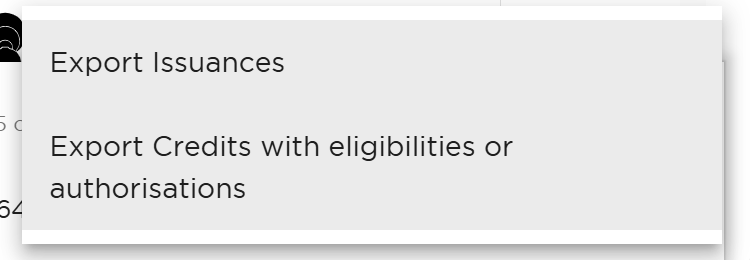
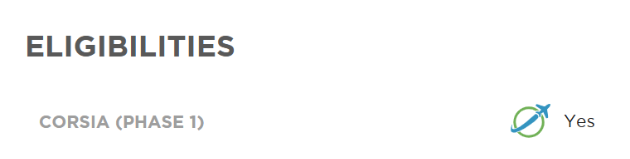
You can also find labelled credits by searching for the relevant issuance pages on the Registry project pages for authorised activities. Registry account holders can see CORSIA labelled credits in the My Credits section of their account.
For any remaining questions, please contact us at help@goldstandard.orgWas this article helpful?
That’s Great!
Thank you for your feedback
Sorry! We couldn't be helpful
Thank you for your feedback
Feedback sent
We appreciate your effort and will try to fix the article